
The happiness ROI of a dinner party
A few weeks ago the World Happiness Report 2026 dropped. 272 pages. I ran it through AI to pull out what actually matters for someone who thinks about events for a living.
One number kept coming up.
Increasing your sense of belonging produces happiness gains six times larger than reducing your social media use.
Six times. From Oxford University and Gallup. The most cited happiness study on the planet.
Quick context on why this matters right now.
The US, Canada, Australia, New Zealand — youth happiness has dropped so badly in these countries that they rank 122nd to 133rd out of 136 countries in happiness changes over the last 15 years. Only countries in active conflict ranked lower. Girls in Western Europe using social media 7+ hours a day score nearly a full point lower on the global happiness scale than girls who use it under an hour. These are not small effects.
So everyone is asking the same question: is social media doing this?
The report’s answer is: partly, yes. But the more interesting finding is what actually fixes it.
When researchers compared two things — cutting social media use versus building belonging — belonging won by a factor of six. Measured across 270,000 students in 47 countries. It’s the most robust finding in the study and almost nobody covered it because “belonging” doesn’t make as good a headline as “social media bad”.
What creates belonging? The report just says it plainly: repeated, in-person contact with people you care about, in contexts worth showing up to.
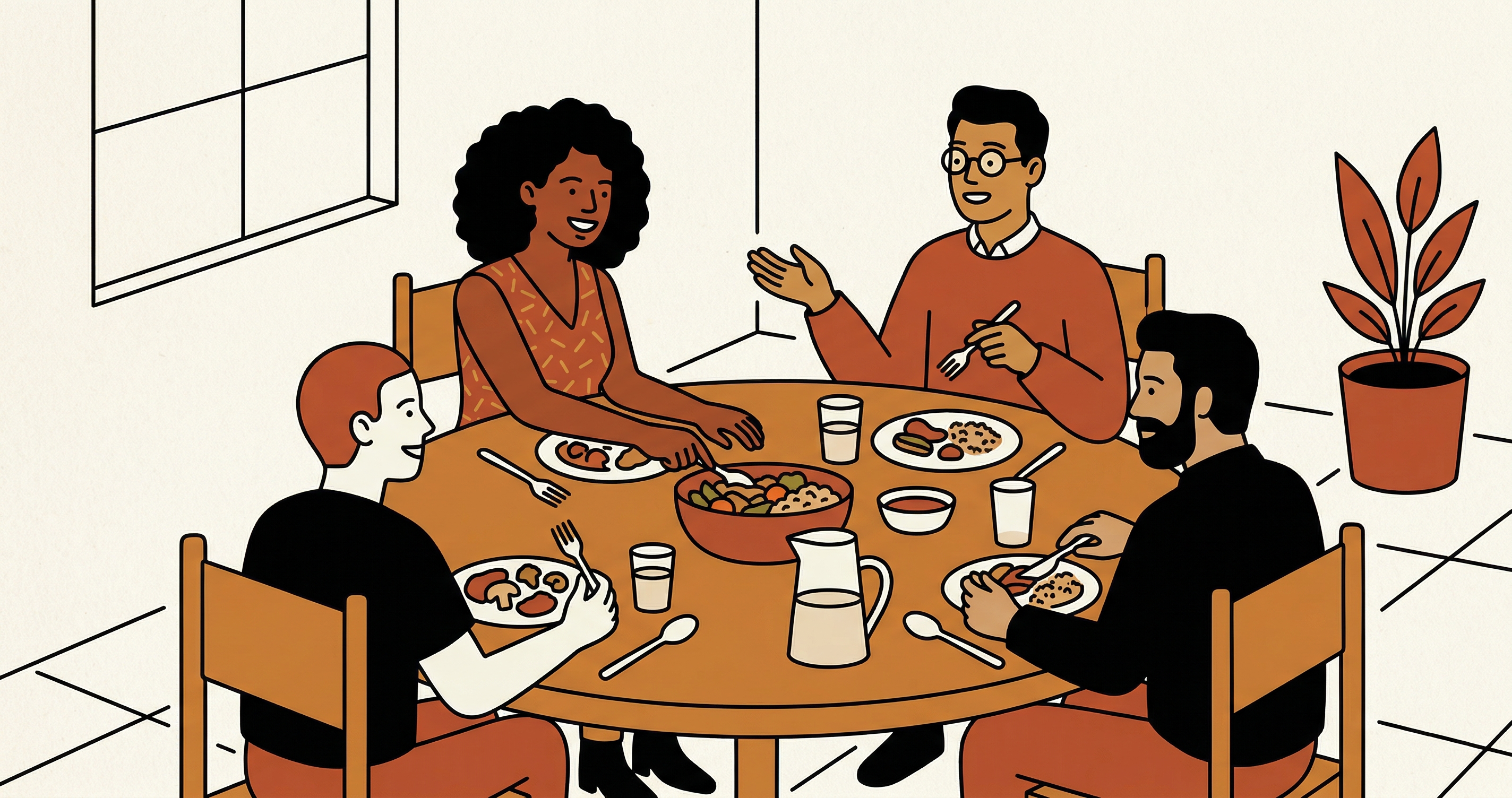
Which is, if you strip everything back, a dinner party. A gathering. Any room where real people show up for each other.
I’ve been building YourEventKit for a while now, and the honest version of why I think events matter has always been harder to articulate than “here are 257 tools”. This is the articulation. A well-run event isn’t a nice occasion — it’s the highest-ROI happiness investment the research has found. Six times higher than the thing everyone is trying to cut back on.
There’s one more finding worth knowing.
Most US college students in the study said they’d pay money to eliminate Instagram and TikTok from their community entirely. Not their own phones — everyone’s. They use these platforms because everyone else does. Opting out individually just makes you lonelier.
Economists call this a negative externality. Your heavy use makes me worse off, even if I barely use it.
Events are the opposite of that. Every extra person who shows up makes the thing better for everyone else. The value compounds. It’s a positive externality — one of the few left.
That’s the happiness ROI of a dinner party. It’s not vibes. It’s the data.
Stay ahead of the curve
Get the latest event tech insights and research delivered to your inbox.
Finding the right tool shouldn't be hard.
Stop guessing. We've curated and reviewed 271 tools across 15 categories so you can build your perfect event stack with confidence.
Explore the Directory